I research past the obvious problem and design for what I actually find
A solo research and design project. Started with one question, why do people screenshot outfits and never act on them, and ended somewhere the market data didn't predict
Role
Product Designer
Timeline
Apr 2023 - Mar 2025
Focus
0→1 Product Design, AI UX, Research

I research past the obvious problem and design for what I actually find
A solo research and design project. Started with one question, why do people screenshot outfits and never act on them, and ended somewhere the market data didn't predict
Role
Product Designer
Timeline
Apr 2023 - Mar 2025
Focus
0→1 Product Design, AI UX, Research
The App
Find anything. See every price, new and resale together. Build a look. Share it without spending a cent
Scan Experience
Camera, link, or upload. Draw a box around any item, no comment, no stranger to ask, no waiting
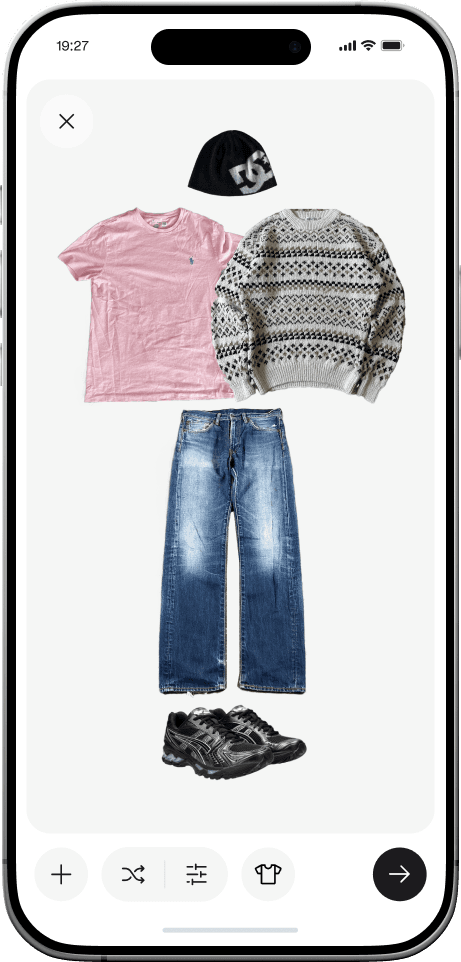
Outfit Builder
Anchor one item, set context, swap pieces one at a time


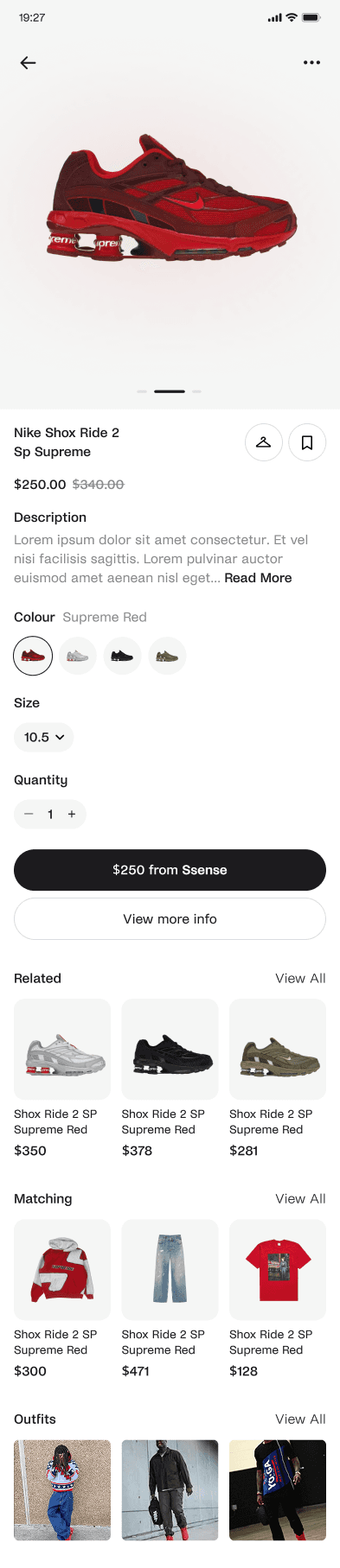
Item Detail
The item detail page displays comprehensive product information including current pricing, original price for comparison, color variations, and product descriptions. Users can quickly share items, save them to their closet or wishlist, and browse through available colorways. The clean product presentation keeps the focus on the item itself while providing all necessary purchase decision information in an easily scannable format. Navigation between similar items and access to price history happens directly from this screen.
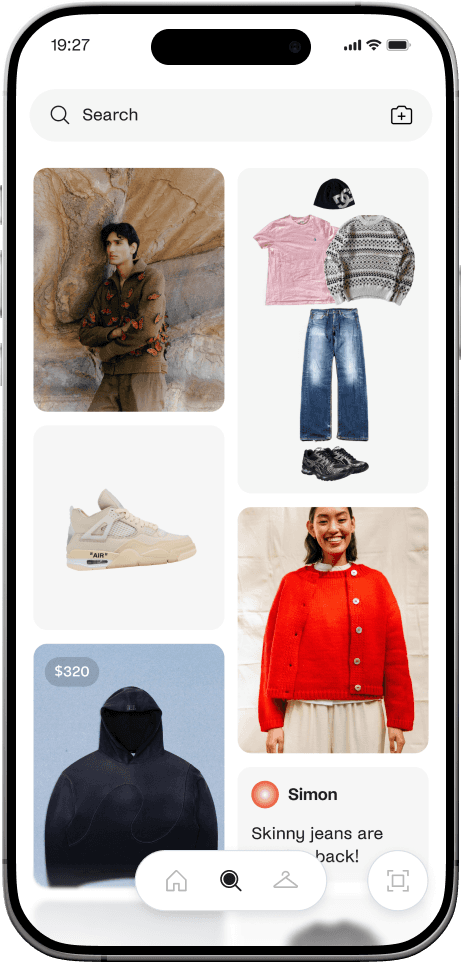
Explore Feed
Post finished looks, get feedback. Creativity that doesn't need a budget


Scheduled Outfits
The schedule view helps users plan outfits in advance, eliminating morning decision fatigue. Each scheduled entry shows the occasion, date, and countdown, with all outfit items displayed as thumbnails. If weather forecasts change significantly, the app suggests alternative outfits using weather-appropriate items from the user's closet.
Context
01
Fashion discovery was broken across five different apps.
Sales reps in 2023 were living across 6–8 disconnected tools. CRM in one tab, email sequencer in another, lead database in a third. AI features existed everywhere but nobody trusted them, the outputs were a black box.
As founding designer, I built PipeIQ from zero: research, system, and every screen. The goal was a unified platform where AI handled the repetitive work and humans stayed in control of every decision.
Problem
See something you love. Hit a wall. Screenshot it. Forget it.
73% of shoppers see items they want weekly on social. Only 11% ask where it's from. Only 12% of those get a useful answer. The other 99 out of 100 screenshot it and let it die
Solution
Find it, price it, style it, share it, without
asking anyone.
Scan from a photo or link, see retail and resale ranked together, build a full outfit, and post the look, all in one private flow, no purchase required
Research
01
The insight that redirected everything came from a question I almost didn't ask
35 interviews, people who shop online regularly and follow fashion content. Given the resale market data, I expected price to dominate. It came up, but almost everyone, unprompted, described a much earlier moment: seeing something they wanted, and choosing not to ask about it
What happens between seeing something and buying it
73%
see an item they want weekly on Instagram or TikTok
11%
comment to ask where it's from
12%
of those get a genuinely useful answer
Out of 100 people who see something they want, roughly one ends up knowing where it's from. The other 99 screenshot it
"I screenshot so many outfits but never do anything with them. I don't want to ask. It feels weird."
62%
of Gen Z shopped secondhand in 2025, transactions up 22% YoY
72%
of shoppers say rising prices are directly impacting clothing spend
$78.8B
projected US secondhand market by 2030, growing 4× faster than retail
Where existing tools break down




Google Lens
Strong image recognition
No price comparison
Results include scam sites
Can't save or organize findings
Pinterest Lens
Good for general inspiration
Weak at finding exact items
Broken or outdated links
Cladwell, Whering (Smart Closets)
Digital wardrobe organization
Limited outfit control
Poor UI/UX
No price discovery
ShopLook, Combyne (Outfit Builders)
Fun for ideation
No real-world item integration
Can't shop directly from outfits
Opportunity
01
Four jobs. One private flow
Not just a scanner. People wanted to find something, price it honestly, build around it creatively, and share the result, even on weeks when they weren't spending anything
Find it
Camera, link, or screenshot, no comment required
Price it
Retail and resale together, ranked, with trust signals
Style it
Build a full look. Owned items or not, doesn't matter
Share it
Post and get feedback. No budget needed
Key design moment
01
My first hypothesis was wrong
I built concepts around this before testing showed the problem wasn't about phrasing. The hesitation comes from the other person controlling the outcome, not from how the question is asked. No matter how polished the comment, the response is out of the user's hands
Old way: ask and wait



Tabs were the intuitive answer. The intuitive answer was wrong
People never opened the resale tab, even people who said resale mattered to them. Out of sight meant out of mind. A notification badge I tried next ("2 cheaper options available") still required an extra action. The fix was blunt: one list, sorted by price, retail and resale mixed
Old way: ask and wait
"The jeans are perfect. Just change the top."
Several participants described styling and sharing looks on weeks they weren't buying anything, working from what they already owned, just to show their creativity and get feedback. The builder needed to work identically whether everything was owned or nothing was, and let people change one item without losing the rest
Old way: ask and wait


Old way: ask and wait
What I learned
Build for real problems, not assumed ones
The most valuable insight came from discovering the two-part social media problem: users don't just feel shy about commenting, they also rarely get helpful responses when they do. This validated the need for a private discovery solution rather than trying to "fix" social interaction.
Economic context shapes user needs
Designing during a time of inflation wasn't just background noise, it fundamentally changed what users needed. Price history, secondhand integration, and drop alerts weren't nice-to-haves; they were essential features that acknowledged real financial pressures.
Consolidation beats specialization
Users don't want the "best" scanner, pricer, and outfit planner separately. They want good-enough versions of all three that work together seamlessly. The value is in removing the friction between related tasks, not perfecting individual features in isolation.